

“Let us not love in word or talk but in deed” (1 John 3:18) — real connection is built from small, repeated acts. Here is a menu of small habits that can make big changes in your relationships. Treat this like a menu, not a to-do list. Pick one thing to try at a time, focus on it for 3 to 4 weeks, then try something else.
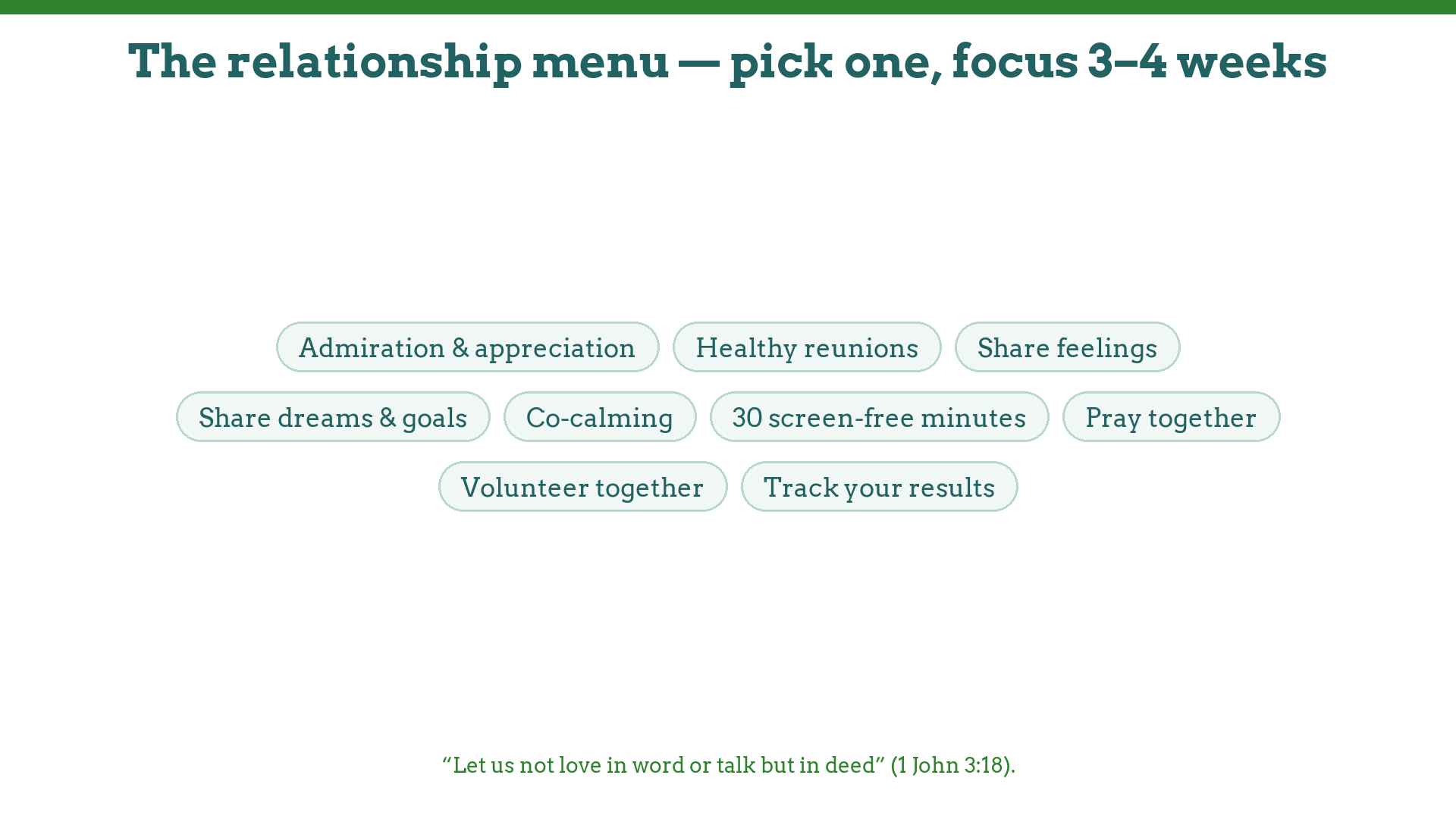
Admiration, affirmation, appreciation
Gratitude is healing for both the “thanker” and the “thanked.” At least once per day, admire, affirm, or appreciate through words, writing, or actions.
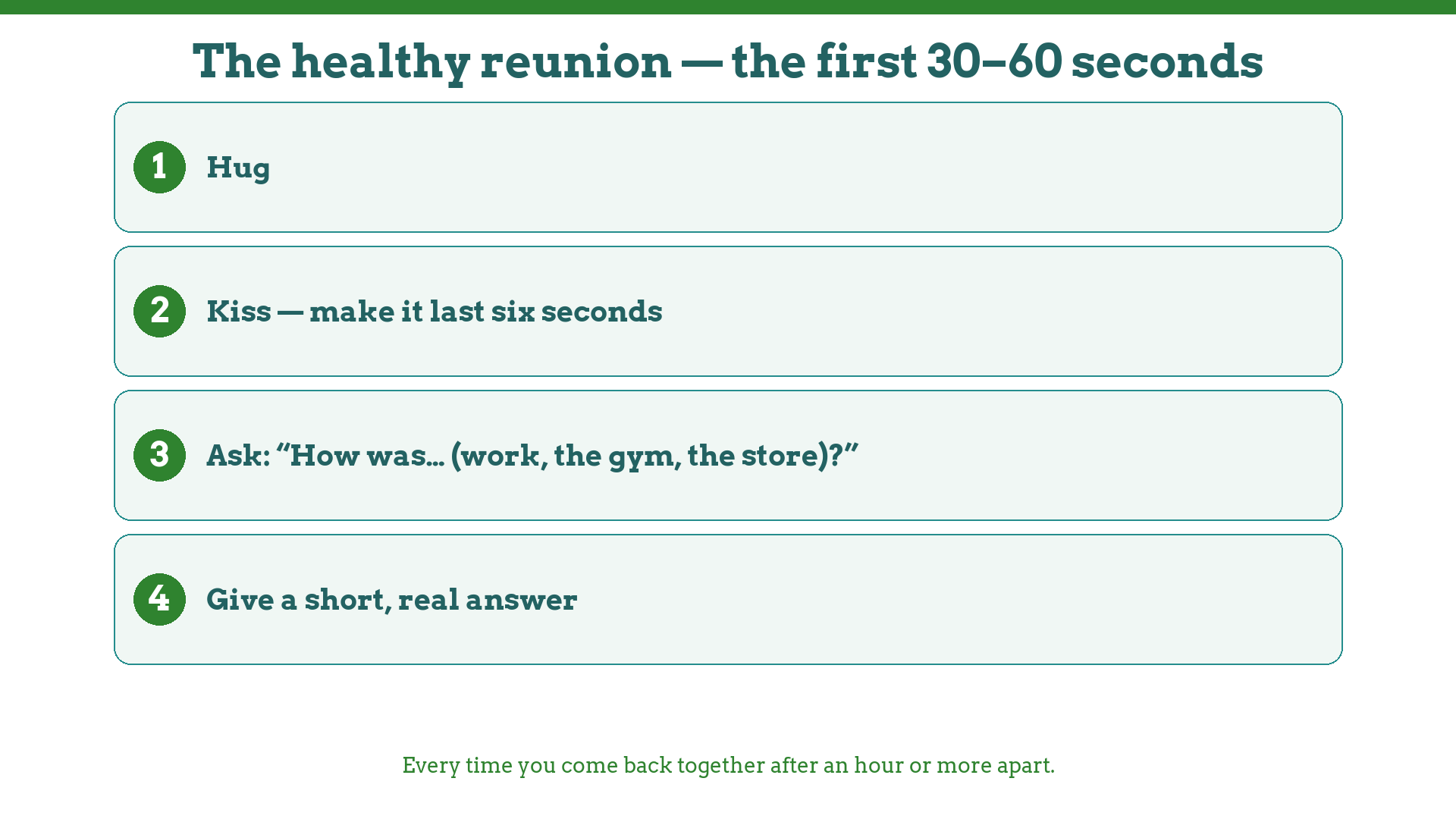
Healthy reunions
Every time you come back together after being apart for an hour or more, in the first 30–60 seconds: hug, kiss, ask each other, “How was… (the gym, work, the grocery store)?” and give a short answer. Try to make the kiss last at least 6 seconds.
Share feelings
You don’t have to be gushing. Just share the two biggest feelings of the day before. They could both be good, both bad, or one of each. Share the feelings and the situations behind them.
Share dreams and goals
You are unique individuals with unique dreams and goals. Healthy relationships learn how to honor each individual’s dreams and goals, even when they seem to conflict. This helps balance independence with dependence for healthier attachment.
Co-calming
When either one of you is overwhelmed, stop talking, make eye contact, put your hand out with your palm up. If safe, gently touch the back of your spouse or partner’s elbow or hold their hand. Sit quietly together and take long, slow, deep breaths. Calming down together is better than calming down alone, when possible.
Build connection
This could be a date, but it can also be simpler than that. Get at least 30 minutes together without screens and without kids to talk, play a board game or card game, or just sit quietly together without distractions. You may have to wake up before the kids, stay up later than the kids, or get a babysitter.
Pray or meditate together
Engaging in your spirituality together is one of the best ways to bring together the benefits of sharing dreams and goals, co-calming, and building connection. Try one of these apps: Headspace, Calm, or Abide (Judeo-Christian meditation).
Volunteer together
Find a cause that you both care about, and volunteer to serve that cause together.
Track your efforts and results
The printable version of this resource includes an efforts-and-results tracker to help you see what’s working.
Save and share

Pin or share these — someone you love may need them today.


Next steps
If your relationship needs more than small habits, we can help. Our team offers couples counseling in Glendale, AZ and online across Arizona and Washington. Or get matched with a great therapist at Mental Health Match.
References
- Algoe, S. B., Gable, S. L., & Maisel, N. C. (2010). It’s the little things: Everyday gratitude as a booster shot for romantic relationships. Personal Relationships, 17(2), 217–233. https://doi.org/10.1111/j.1475-6811.2010.01273.x
- Aron, A., Norman, C. C., Aron, E. N., McKenna, C., & Heyman, R. E. (2000). Couples’ shared participation in novel and arousing activities and experienced relationship quality. Journal of Personality and Social Psychology, 78(2), 273–284. https://doi.org/10.1037/0022-3514.78.2.273
- Fincham, F. D., Lambert, N. M., & Beach, S. R. H. (2010). Faith and unfaithfulness: Can praying for your partner reduce infidelity?. Journal of Personality and Social Psychology, 99(4), 649–659. https://doi.org/10.1037/a0019628
- Gable, S. L., Gonzaga, G. C., & Strachman, A. (2006). Will you be there for me when things go right? Supportive responses to positive event disclosures. Journal of Personality and Social Psychology, 91(5), 904–917. https://doi.org/10.1037/0022-3514.91.5.904
- Holt-Lunstad, J., Smith, T. B., & Layton, J. B. (2010). Social relationships and mortality risk: A meta-analytic review. PLoS Medicine, 7(7), e1000316. https://doi.org/10.1371/journal.pmed.1000316